
Pimax Announces Crystal Pro Wireless VR Headset
The new headset starts at $1,399, with eye tracking, Mini-LED displays, and options for wireless PC VR and mixed reality.
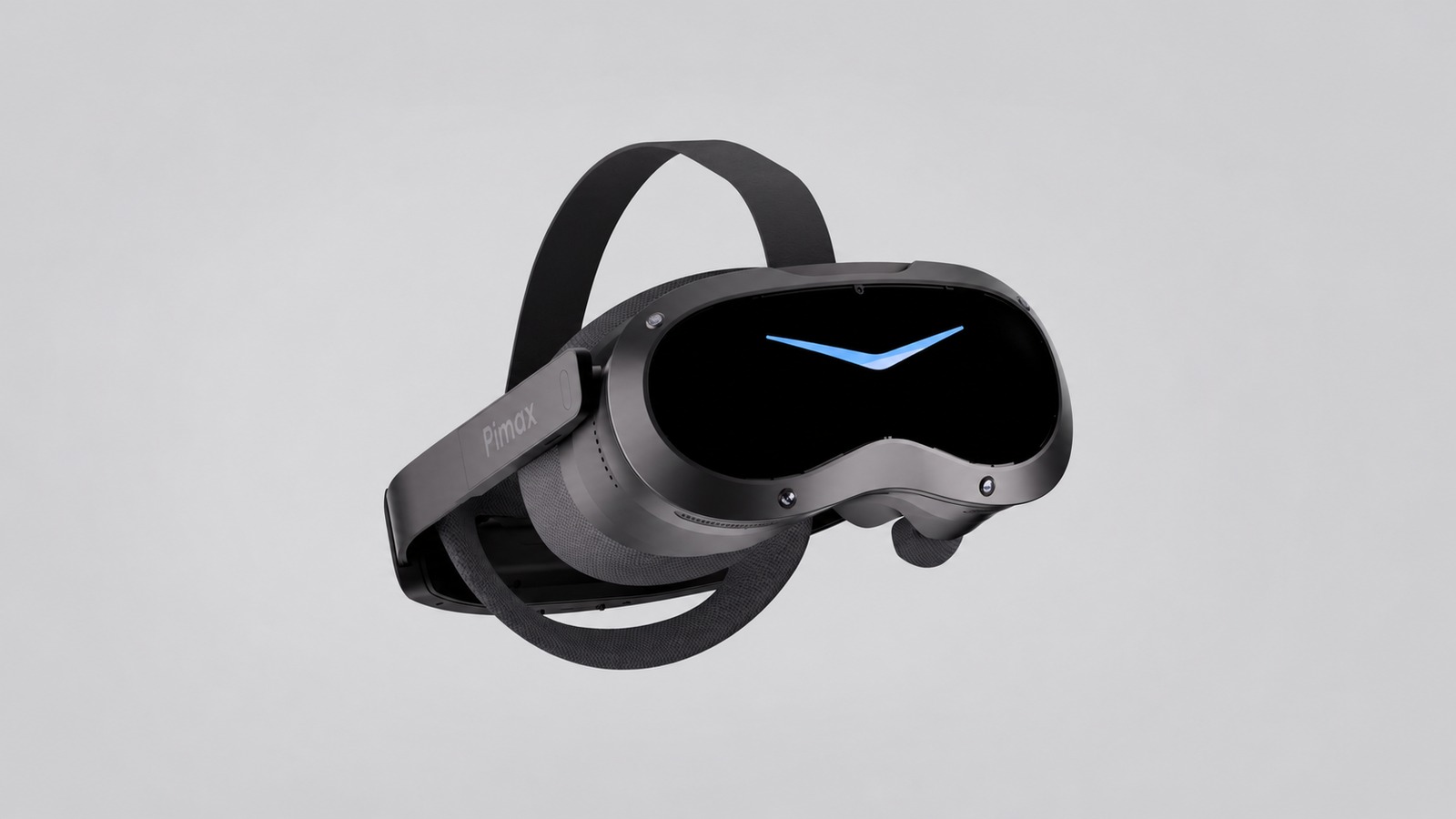
Pimax has announced Crystal Pro (opens in a new tab), a new PC VR headset with eye tracking, Mini-LED displays, and wireless streaming built in. It starts at $1,399, with shipping planned for spring 2027.
You can play from your PC over Wi-Fi or plug in through DisplayPort. Pimax also says it can run Android and OpenXR mobile apps without a PC, including watching movies away from your desk.
The Specs and How It Compares
Pimax lists 2880 × 2880 pixels per eye, glass aspheric lenses, and a 110-degree horizontal field of view. The QLED panels use Mini-LED backlighting with 576 dimming zones per eye, allowing dark and bright parts of a scene to be lit separately.
That resolution matches Crystal Light (opens in a new tab), which also uses glass aspheric lenses and a DisplayPort connection. The Pro adds eye tracking and built-in wireless. Crystal Light’s foveated rendering keeps the detailed area in the center of your view; Pro can move it with your eyes.
If you’re comparing it with Crystal Super (opens in a new tab), the Super’s QLED models still have more pixels at 3840 × 3840 per eye. Pro gives you more ways to use the headset, rather than a higher-resolution screen than everything else Pimax sells.
The displays support up to 120 Hz when wired. Eye tracking also enables dynamic foveated rendering, which focuses rendering detail where you’re looking to reduce the work your graphics card has to do.
Mixed Reality and Swappable Parts
Four cameras handle tracking on the headset. You can add a Lighthouse faceplate for base-station tracking, or an optional mixed-reality faceplate with color passthrough and LiDAR depth sensing.
Power comes from an included 16,000mAh battery pack you carry separately. The design also has adjustable eye relief, a magnetic face cushion, and three buttons you can remap.
Pimax’s new ringless controllers (opens in a new tab) have a neat extra trick. Clip the two halves together and they become a wireless gamepad for Windows and Steam. Those are sold separately; Crystal Pro comes with ringed controllers.
The Wireless Upgrade
Wi-Fi streaming and a Wi-Fi 6E adapter come with the headset. The optional 60G AirLink kit goes further, sending an uncompressed image in the area you’re looking at while streaming the rest of the view more efficiently. Pimax calls this Native Foveated Streaming.
It runs at up to 90 Hz and uses two room antennas, with Wi-Fi as a fallback if the 60 GHz link drops. Pimax puts the added wireless latency below 2 milliseconds.
Price and Availability
Crystal Pro costs $1,399. The bundle with the third-generation 60G AirLink kit is $1,899, or you can buy the kit separately for $599. A DisplayPort cable is optional, too.
Pimax plans hands-on demos for the fourth quarter of 2026 and lists spring 2027 for shipping in its launch FAQ (opens in a new tab). Its store is taking $1 reservations, with $20 off the headset or $50 off the AirLink bundle at launch.
More from Glasses & Headsets.
Browse all stories
Meta VR Glasses · 1 min read
Preview Meta VR Glasses’ Field of View on Your Quest 3
Duuro Plays’ free simulator puts the comparison inside your headset. We tried it on Quest 3 and recorded a look at how it works.

XREAL Aura · 2 min read
XREAL Announces Aura Android XR Glasses Pricing Starting at $1,279
Existing reservation holders can now complete their orders, with two configurations and priority shipping expected before the holidays.

Immersive Film · 2 min read
Open Season Brings Draymond Green’s Therapy Sessions to Meta Quest
Meta Presents’ first series follows the NBA champion through trade rumors, family life, and career uncertainty in immersive 180-degree video.