Apple has 16 open roles that explicitly name robots
Four Cupertino jobs focus on AI-powered behavior, while nine Special Projects roles span touch, simulation, interaction, and hands-on robot hardware.

Apple currently has 16 open U.S. positions with robot or robotics in the job title, a hiring footprint that reaches well beyond one new senior AI opening.
Together, the jobs show Apple assembling many of the pieces needed for robots that can understand people, move through the physical world, respond through touch, and turn an instruction into an action.
Spatial Insider counted unique live postings in Apple’s Careers search for robotics (opens in a new tab) on August 11. The search returned 123 results because Apple also matches the word inside descriptions and qualifications. Limiting the count to titles that explicitly include robot or robotics produced 16 openings, all in Cupertino, Santa Clara, or Sunnyvale.
Four jobs focus on a robot’s intelligence
The clearest product-facing cluster sits in Cupertino. Apple is hiring a Senior Robotics Algorithm Engineer, Senior Robotics Software Engineer, Sr. Robot ML Engineer, and the newly posted Sr. Robotics AI Engineer.
The Robotics AI Engineer listing (opens in a new tab) asks for someone to use frontier reasoning models to turn a person’s intent into a plan, then adjust that plan as the surrounding context changes. The system would combine audio, text, and vision, run in real time, and be distilled into smaller models for Apple silicon.
That is a plain blueprint for embodied AI. A person asks for something, the machine understands the request and its surroundings, then keeps checking whether its actions are working instead of following one fixed command.
In a LinkedIn post sharing the opening, an Apple engineer said the team is building embodied intelligence systems for “genuinely delightful, intelligent products.” Neither the post nor the job listing identifies a device or says when one will ship.
Special Projects reaches from touch to hardware
Nine more openings carry the Special Projects name. They cover robotics research, machine learning, interaction, prototyping, mechatronics, tactile AI, tactile simulation, tactile controls, and tactile research.
Tactile systems give a robot a way to sense or create physical contact. Paired with mechatronics, which combines mechanics, electronics, and software, those jobs point to work that must exist in the real world rather than only inside a screen.
The Robotics Prototyping Engineer role makes that physical focus especially clear. Apple wants someone who can stand up robot platforms, design custom mechanisms and electronics, and write the low-level software connecting the parts.
Three openings build robots that test products
The final three jobs are Systems Quality Robotics Automation Engineer postings. Two are in Cupertino and one is in Sunnyvale. Those teams use robot arms and automated fixtures to test Apple hardware, so they are robotics positions but not evidence of a consumer robot.
That distinction matters. Apple’s 16-title count is a useful snapshot of robotics hiring, not a count of 16 people working on one secret product. The openings span at least three visible kinds of work: intelligent behavior, Special Projects research and prototypes, and automated product testing.
Apple has already shown the research pieces
Apple’s published research gives a clearer picture of the questions behind the hiring. Its ELEGNT project (opens in a new tab) explored how a lamp-like robot could use motion to show attention, intent, and emotion while completing a task. Expression-driven movement improved engagement in the project’s user study.
Another project called ARMADA (opens in a new tab) used Apple Vision Pro to show people real-time virtual robot feedback and collect human motion that could be replayed on physical robot hardware.
Research papers and job listings do not confirm an Apple robot product. They do show the breadth of the stack Apple is building around: AI that understands a request, algorithms that plan movement, software that controls hardware, touch that makes contact legible, and interaction design that can make a machine feel less mechanical.
The next meaningful evidence will be a named product, a public prototype, or more specific language from Apple. Until then, the jobs reveal the ambition: make robots that can understand us, act around us, and feel more natural to live with.
More from Robotics.
Browse all stories
Spatial AI · 2 min read
AMD to Buy World Labs for $8.2 Billion
Fei-Fei Li will become AMD’s chief scientist, bringing the team behind Marble and Atlas closer to the chips that power its research.
Robotics · 2 min read
Niantic Launches 100 Real-World Scenes for Robot Training
The Places Library pairs detailed 3D scenes with physical surfaces for simulation, with free samples of a London street and a New Jersey warehouse.
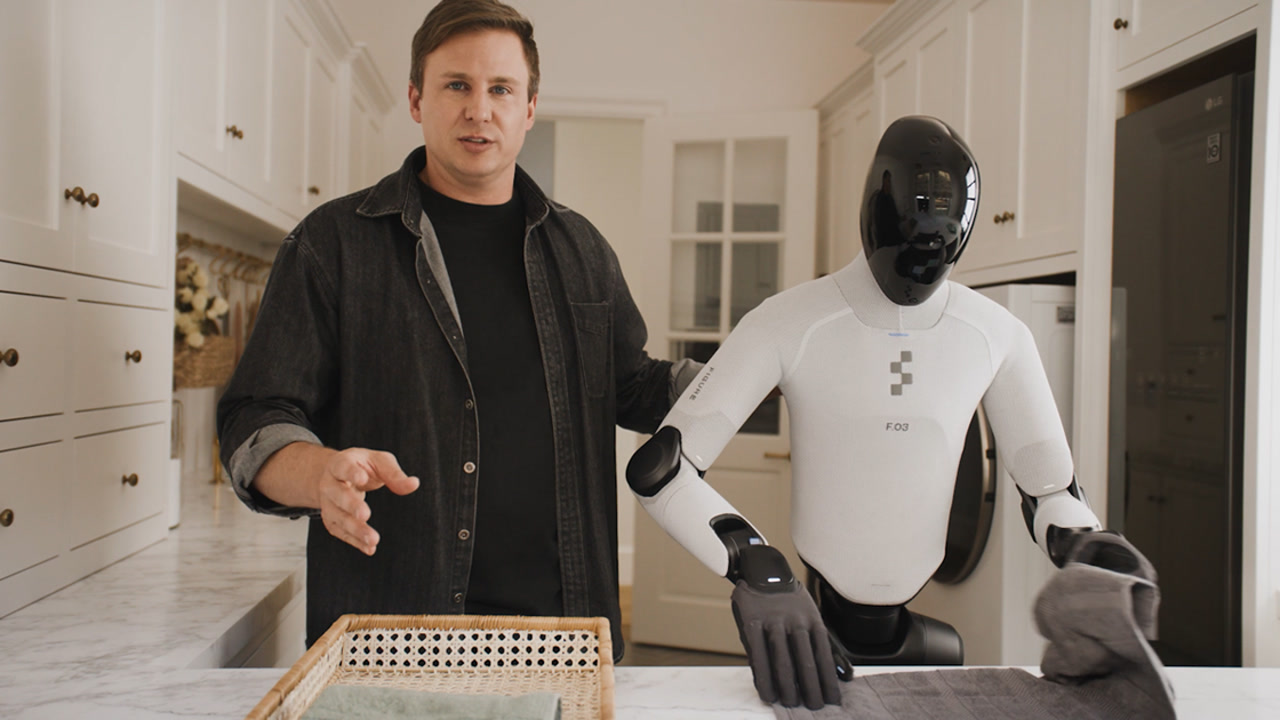
Figure Helix · 2 min read
Figure Introduces Helix 2.5, Bringing LLM-Style Scaling to Robot Learning
Figure’s robots tidied rooms, folded towels, and made beds across 30 homes without training in those spaces.