Matic Robot Vacuum Adds Voice and Gesture Controls
Cues understands commands in more than 70 languages and uses on-device vision to turn a pointing gesture into a specific place to clean.
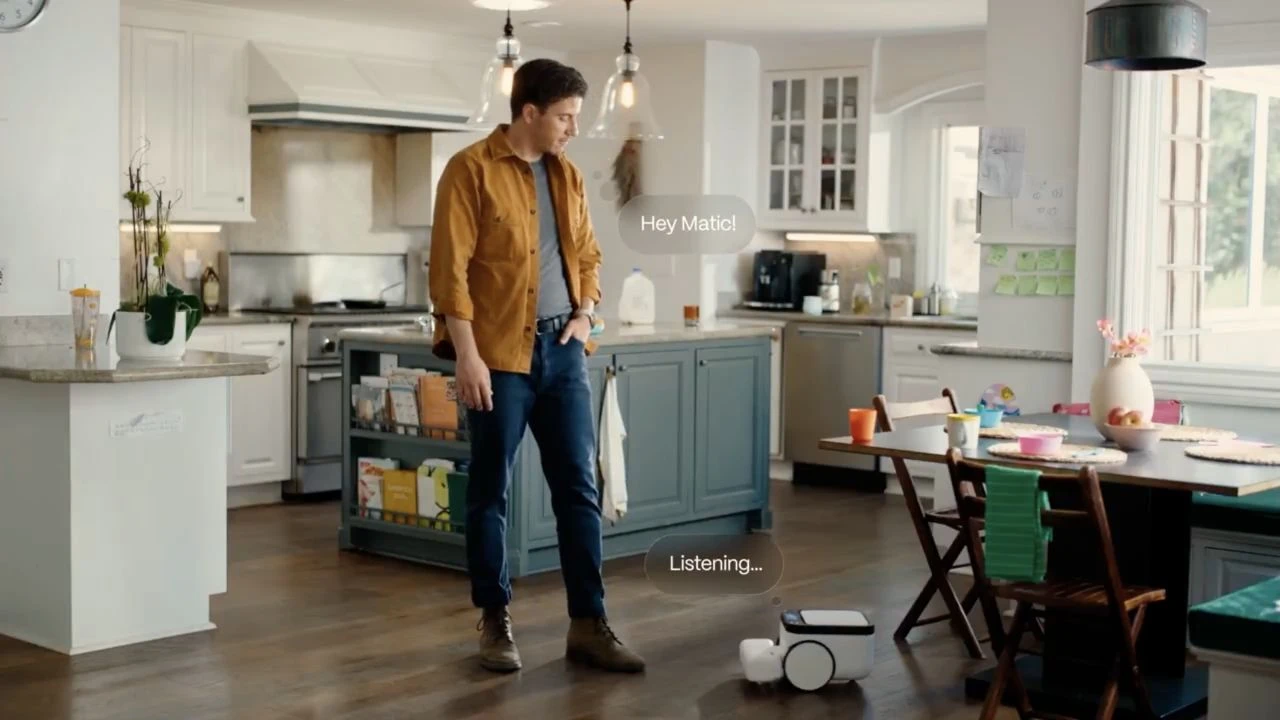
Matic has added voice and gesture controls that let someone point at a mess and tell the robot vacuum to clean it.
The new Cues software can also send Matic to a named room, start a schedule, call the robot over, or ask it to follow a person through the home. Matic says it understands commands in more than 70 languages and can hear someone from up to 10 meters away.
Matic began rolling out Cues on August 13. The company’s launch video shows a child pointing at spilled milk and saying, “Hey Matic, clean this,” before the robot drives over and mops the spot.
Pointing gives the command a place
Cues uses one model to listen for the “Hey Matic” wake phrase, another to work out where the voice came from, and a third to recognize a person’s hand and pointing direction. Those three models run on the robot.
The gesture model turns the direction of a finger into a location inside Matic’s 3D map. That lets a short command such as “clean this” carry both an action and a place without opening the phone app and drawing an area on the map.
Voice commands can include more detail. Matic lists examples such as vacuuming a room, cleaning carpet edges, starting a saved schedule, and following the speaker.
Gemini handles commands after the chime
Cues is off by default. Owners must opt in before the robot’s microphones turn on, and they can disable the feature again in Settings.
Matic says the wake phrase is detected locally and other ambient audio is discarded. After the robot hears “Hey Matic” and plays a chime, the spoken command is sent over an encrypted connection to the Gemini API for parsing. The company says the request is anonymous, contains no user information, and is not stored.
Camera data used to recognize a person and a pointing hand remains on the robot, according to Matic. The company is also developing a smaller on-device command model, although it may initially support only the most common commands and English.
Cues arrives as a software update
Cues is rolling out to Matic owners as a software feature rather than new hardware. The robot vacuum and mop currently starts at $1,245 in the United States through September 9, down from its regular $1,495 price, and Matic says (opens in a new tab) new orders ship in three to five days.
The larger test will come in real homes, where voices, rooms, hands, people, and everyday messes rarely line up as neatly as they do in a launch video. For now, Cues gives Matic owners a more natural alternative to reaching for the app whenever the floor needs attention.
More from Robotics.
Browse all stories
Spatial AI · 2 min read
AMD to Buy World Labs for $8.2 Billion
Fei-Fei Li will become AMD’s chief scientist, bringing the team behind Marble and Atlas closer to the chips that power its research.
Robotics · 2 min read
Niantic Launches 100 Real-World Scenes for Robot Training
The Places Library pairs detailed 3D scenes with physical surfaces for simulation, with free samples of a London street and a New Jersey warehouse.
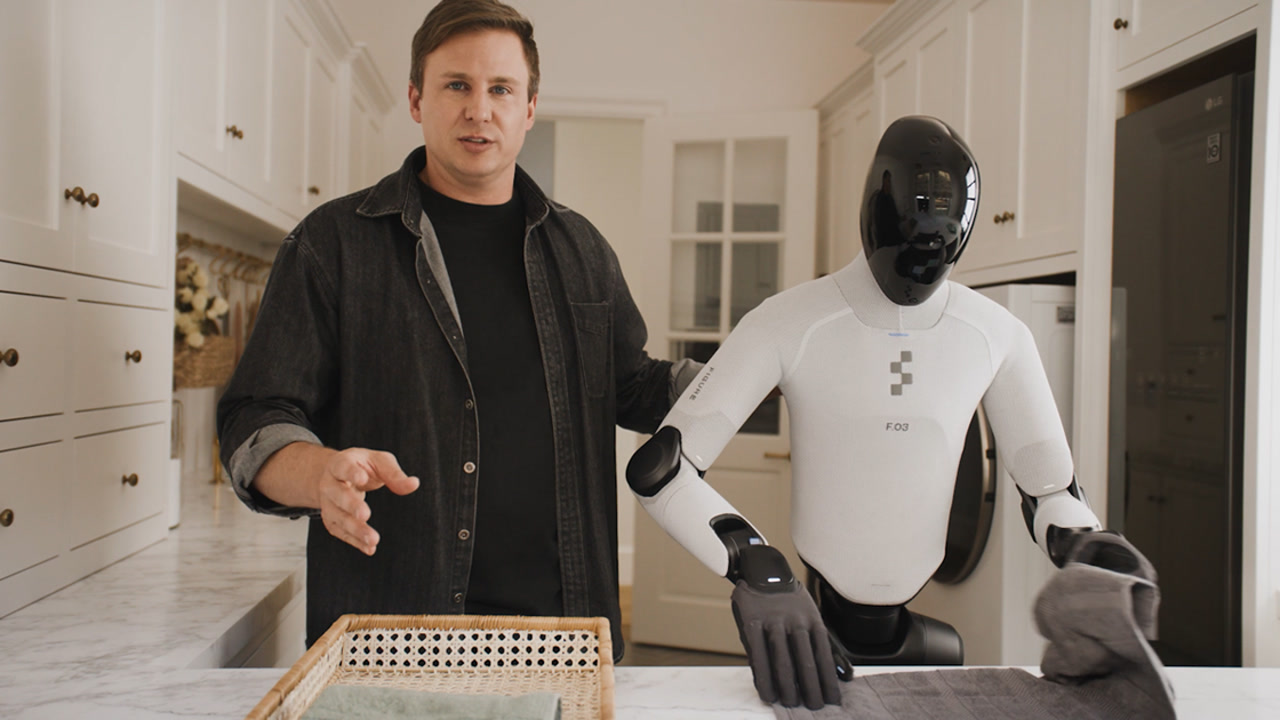
Figure Helix · 2 min read
Figure Introduces Helix 2.5, Bringing LLM-Style Scaling to Robot Learning
Figure’s robots tidied rooms, folded towels, and made beds across 30 homes without training in those spaces.