
Niantic Launches 100 Real-World Scenes for Robot Training
The Places Library pairs detailed 3D scenes with physical surfaces for simulation, with free samples of a London street and a New Jersey warehouse.
Niantic Spatial has launched the Places Library (opens in a new tab), a collection of 100 real-world 3D environments that robot developers can use to train and test their AI in simulation.
The catalog gives teams a way to try different surroundings without first scanning every location themselves. Niantic says it covers industrial, delivery and logistics, commercial, and residential spaces.
A scene robots can see and touch
Each download combines two parts. A Gaussian splat recreates the appearance of a place from captured images. A matching collision mesh tells the simulator where solid surfaces are, so a virtual robot can meet a wall instead of passing through it.
Niantic says both layers come from the same reconstruction and arrive at real-world scale, with gravity aligned. That removes the separate step of lining up the visual scene with its physical structure.
The company delivers each scene as a USDZ file, a package for 3D content. It lists support for NVIDIA Isaac Sim, Isaac Lab, and compatible OpenUSD simulators.
These are training environments, rather than a finished robot skill. Testing in a wider range of spaces can expose where a robot’s behavior breaks down, but the launch announcement does not show measured gains on physical robots from using the library.
Two scenes are free to try
The library page (opens in a new tab) offers free downloads of Leake Street Arches in London and a warehouse with pallet racks in Linden, New Jersey. Other listed locations require an access request.
Broader access comes through Niantic’s paid Embodied AI plans (opens in a new tab). The entry Evaluate plan has a three-month minimum and includes 15 library downloads across that term, plus 15 capture minutes each month for reconstructing a team’s own sites. Niantic directs teams to sales for plan pricing.
Niantic plans to expand the catalog based on requests from developers. Teams can start with the two sample scenes, then request the kinds of places their robots need to work in.
More from Robotics.
Browse all stories
Spatial Capture · 2 min read
How to View Insta360 Spatial Captures on Apple Vision Pro
Paste an Insta360 share link into the PhotoSplat app to step inside your capture, move around, and see it from new angles.
Creator Tools · 2 min read
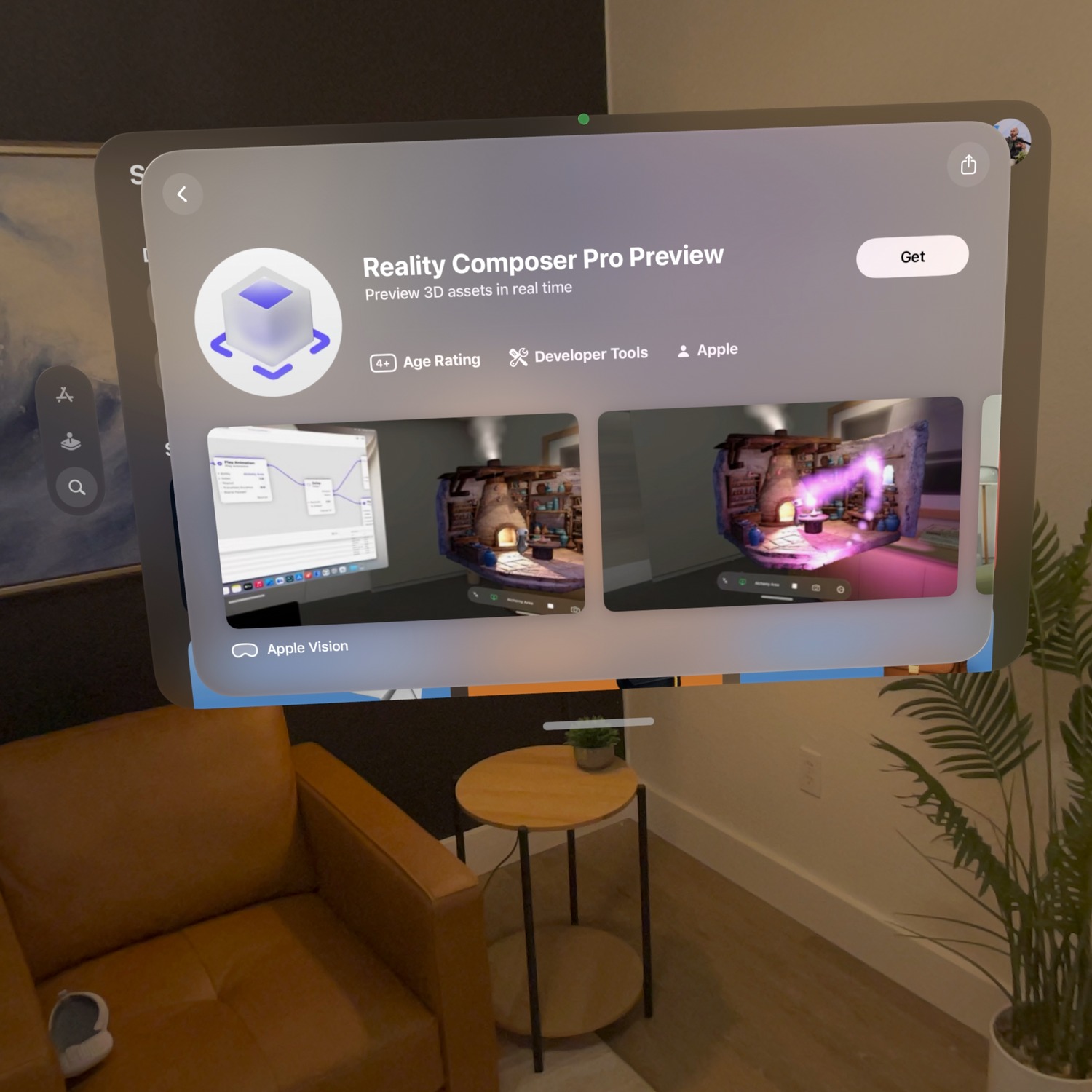
Reality Composer Pro Preview Is Now Available for Vision Pro
Apple’s Preview companion app lets creators edit on a Mac and check materials, animation, and layout live inside the headset.

Spatial Insider 360 · 1 min read
Explore the iPhone 18 Pro launch at Apple Fifth Avenue in 360°
Immerse yourself in launch day at Apple Fifth Avenue with Spatial Insider’s 360° video, available in full 8K on Apple Vision Pro with M5.