
Valve Opens Sign-Ups for Its $1,059 Steam Frame VR Headset
The wireless headset streams PC games and runs supported titles on its own. A randomized reservation system decides who gets the first chance to buy.
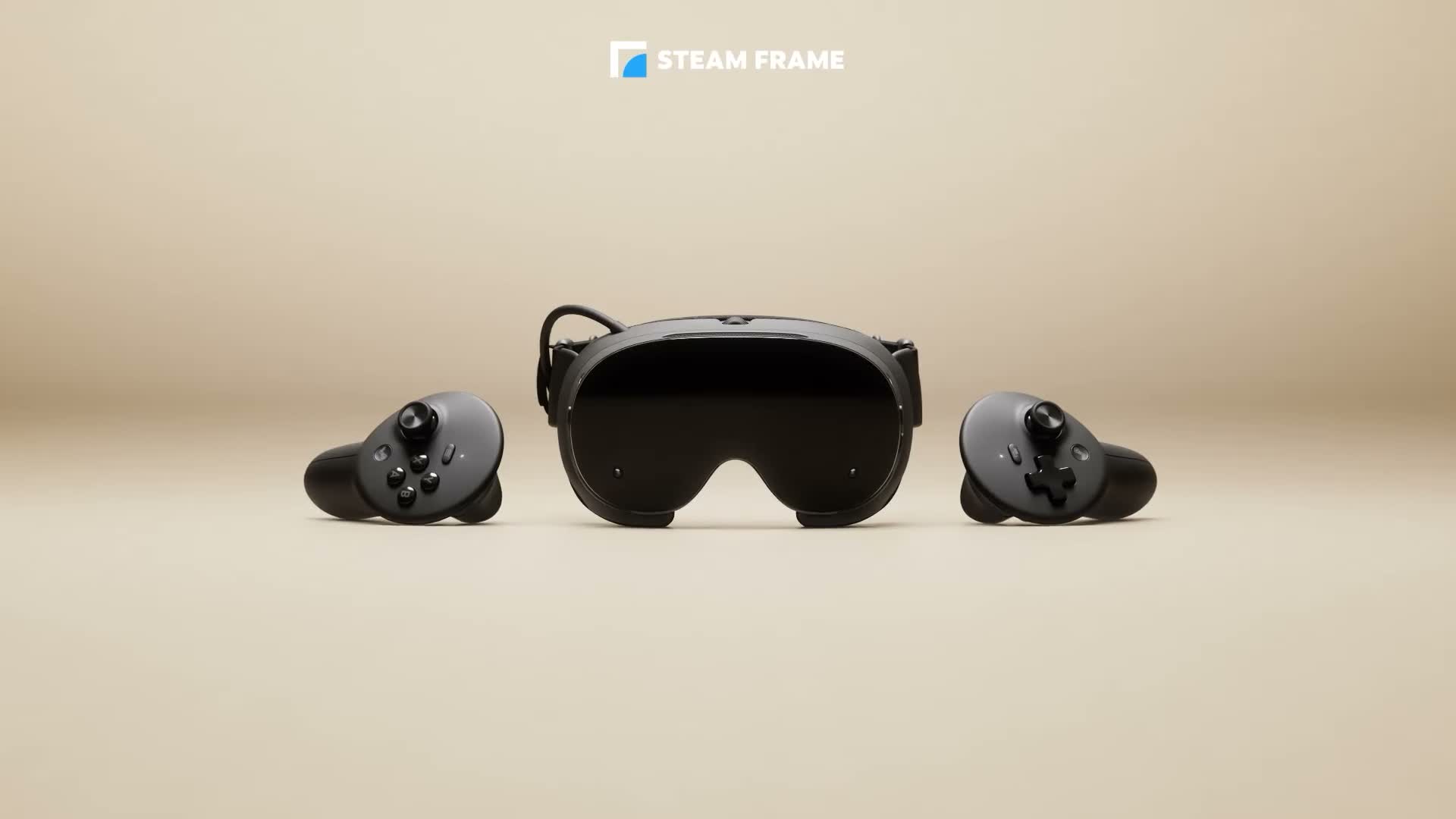
Valve has opened Steam Frame reservation sign-ups (opens in a new tab), with U.S. prices of $1,059 for the 256GB headset kit and $1,299 for the 1TB model.
You can put your name down now, but checkout comes later. Sign-ups close September 17 at 10 a.m. Pacific, when Valve will randomize the list. The first purchase emails go out September 18.
Steam Frame brings two ways to play into one headset. Stream VR and non-VR games from your PC, or install supported games directly on the device. Valve says more than 100 games are already Steam Frame Standalone Verified.
Your PC Games Without the Cable
The included 6 GHz wireless adapter creates a dedicated connection to your PC. One headset radio handles the game’s picture and sound while another connects to Wi-Fi, keeping the two from competing for the same link.
Eye tracking helps direct the stream’s sharpest detail to where you’re looking. Valve calls this foveated streaming. Its new Multi-Link Streaming feature also uses available connections together to keep the stream stable as conditions change.
For games installed on the headset, Steam Frame has a Snapdragon 8 Gen 3 chip, 16GB of memory, and SteamOS. Both storage options include a microSD card slot. Standalone compatibility is separate from PC streaming, so check a game’s Verified status before planning to play without your computer.
What Comes in the Kit
Both kits include the headset, motion controllers with gamepad controls, the wireless adapter, and Half-Life: Alyx. Existing Alyx owners do not receive an extra copy.
A power supply is sold separately for $29. Valve says a Steam Deck charger or an equivalent USB-C charger rated at 45 watts or more will work. An optional $59 ergonomic kit adds controller hand straps, a headset top strap, and an extended light blocker.
How to Get One
Choose one model before the September 17 deadline. Valve will email the results that day, placing applicants in either a reservation queue or a waitlist. People in the reservation queue receive purchase invitations as units become available, with 72 hours to complete the order once that email arrives.
Valve’s eligibility rules (opens in a new tab) require buyers to be at least 18, live in a supported region, and hold an unlimited Steam account with a purchase made before April 27, 2026. Registration is free, buying is optional, and purchases are limited to one headset per household.
Steam sells directly in the U.S., Canada, UK, EU, and Australia. KOMODO handles Japan, Taiwan, and Hong Kong, with South Korea listed as coming soon. Purchase invitations begin September 18, but Valve has not given every buyer a guaranteed delivery date.
You have until Thursday morning to choose a model on the Steam Frame page (opens in a new tab). Joining earlier does not move you ahead in the randomized list.
More from Glasses & Headsets.
Browse all stories
Pimax Crystal Pro · 3 min read
Pimax Announces Crystal Pro Wireless VR Headset
The new headset starts at $1,399, with eye tracking, Mini-LED displays, and options for wireless PC VR and mixed reality.
Meta VR Glasses · 1 min read
Preview Meta VR Glasses’ Field of View on Your Quest 3
Duuro Plays’ free simulator puts the comparison inside your headset. We tried it on Quest 3 and recorded a look at how it works.

XREAL Aura · 2 min read
XREAL Announces Aura Android XR Glasses Pricing Starting at $1,279
Existing reservation holders can now complete their orders, with two configurations and priority shipping expected before the holidays.