
URXR One passes $650,000 on Kickstarter in two days
The $799 glasses promise a 90-degree view, room-scale tracking, and five virtual screens while keeping the frame to 93 grams.
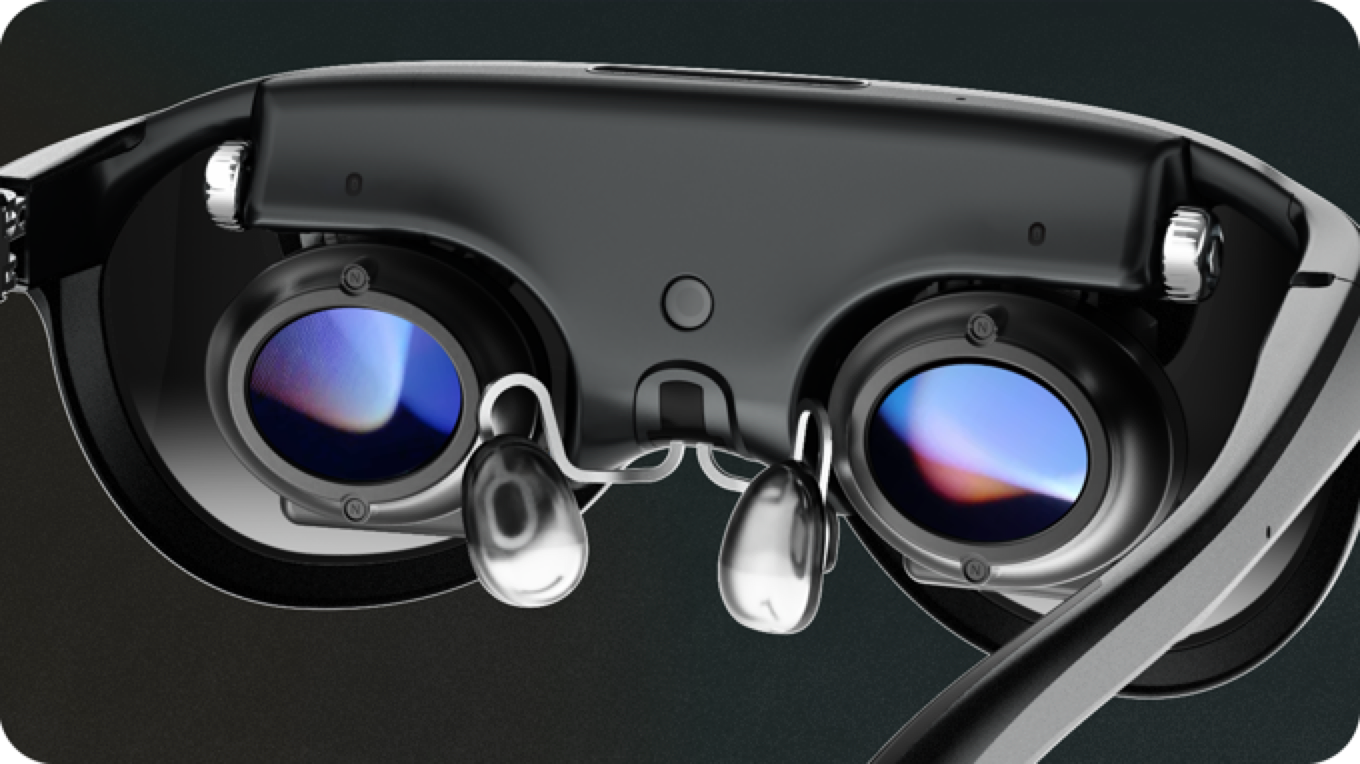
Unseen Reality’s URXR One mixed reality glasses have raised more than $650,000 on Kickstarter two days after the campaign opened.
The 93-gram glasses promise to turn a laptop, phone, or gaming handheld into a wide private display without putting the weight of a full headset on your face.
As of August 6, the live campaign (opens in a new tab) had collected $651,628 from 835 backers. That is more than 13 times its $50,000 goal, with the campaign scheduled to close on September 18.
A headset display cut down to glasses
URXR One uses a 2,448 × 2,064 Micro-OLED display for each eye. Unseen Reality lists a 90-degree diagonal field of view, 90 Hz refresh rate, and about 36 pixels per degree.
Unlike display glasses that let you look through a transparent lens, URXR One shows the room through cameras. That video view lets an opaque virtual screen sit beside your desk, keyboard, and hands, or fill your view when you want a more immersive setting.
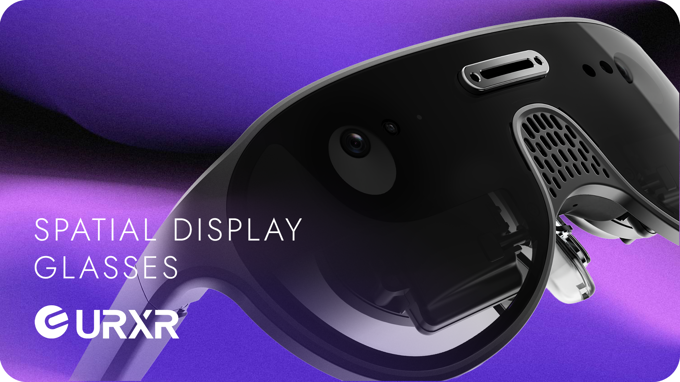
Cameras, motion sensors, and a spatial processing chip inside the frame track how the glasses move. In six degrees of freedom, a screen can stay fixed in the room as you turn, lean, or stand. A three-degree mode keeps it tied to the direction of your head.
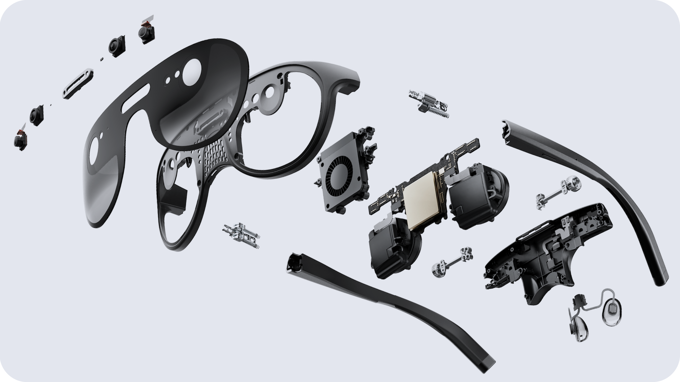
A USB-C cable carries video and power from a compatible device. A simple Bypass Mode mirrors one large screen without an app. The URXR Connect app is meant to add as many as five spatial screens, hand controls, panoramic layouts, and virtual environments on Windows and Mac.
The small frame moves the bulk elsewhere
The 93-gram weight comes with a clear tradeoff. URXR One has no battery and does not run apps on its own. The connected computer, phone, or handheld supplies the content, while the glasses handle display, tracking, and camera processing.
Laptops and some handhelds can power the glasses directly. Phones need the separate URXR Power Hub, a 10,000 mAh battery that weighs 215 grams and sits in a pocket. The company says it should provide more than three hours of use. The glasses also have four microphones but no built-in speakers.
Unseen Reality says URXR Connect will support Windows and Mac when the glasses ship in mid-October. iPhone and Android support is planned for December, and the company says Apple approval could affect some iPhone features. A single large display should still work without the app on devices that support USB-C DisplayPort video.
Who is behind URXR One
Founder and CEO Haojiang “Edward” Zhou has a background that fits the product. Caltech’s Biophotonics Lab (opens in a new tab) identifies him as a 2017 electrical engineering PhD who went on to work as a display development architect at Apple.
That record shows relevant optics experience. It does not establish a record of manufacturing and supporting consumer hardware at scale.
Unseen Reality remains small. Its public LinkedIn page (opens in a new tab) lists 2–10 employees, while Kickstarter labels URXR One as the creator’s first project. The campaign describes experience across optics, displays, electrical engineering, tracking, industrial design, and software, but it does not name most of the team or a manufacturing partner.
The glasses are more than a rendering. Working prototypes appeared at AWE, and XR reviewer Sebastian Ang tested a loaned unit before the campaign. In his MRTV review (opens in a new tab), he described the hardware as polished and praised its field of view, display clarity, comfort, and low-latency camera view. He also noted that dark rooms add noise to the passthrough image.
Ang’s review is useful evidence that URXR One exists and can deliver a polished experience in prototype form. It still cannot tell us whether mass-produced units will be consistent, whether the companion software will be ready, or whether a small company can fulfill hundreds of orders on schedule.
What still has to go right
The standard pledge costs $799, excluding shipping, and Unseen Reality estimates delivery in October 2026. The company says it has working prototypes and a supply chain in place, putting the campaign beyond a render and an idea.
Mass production, software, and fulfillment are still ahead. The mobile apps need more time, Apple approvals remain outside the company’s control, and Kickstarter rewards are not guaranteed.
URXR One could become a useful new kind of spatial display. It could also arrive late or fall short of the prototype experience. Final hardware will give us the answer.
More from Glasses & Headsets.
Browse all stories
Meta Connect · 3 min read
What to Expect at Meta Connect This Week
Meta has promised glasses updates, and its agenda already names VR glasses, new wearable tools, and Muse AI.
Snap SPECS · 6 min read
Everything Snap Revealed About SPECS at Its September Launch
Shared AR games, everyday tools, a cellular case, and SPECS Intelligence give a clearer picture of the glasses, with an AI preview you can try now.
GOLF+ · 2 min read
GOLF+ Now Lets You Putt With a Real Club and Ball on Quest
Immersive Putting brings virtual greens into your room, using the speed and direction of a real ball to simulate where your shot would go.